Thousands of projects at risk that improve commutes, improve safety and drive economic growth
WASHINGTON, D.C. – U.S. Senator Maria Cantwell (D-Wash.), Ranking Member of the Senate Committee on Commerce, Science and Transportation, today released a series of “Chopping Block” reports detailing the cuts to the nation’s transportation system if the Republican-controlled Congress refuses to renew advance appropriations for infrastructure programs. In the face of the ongoing affordability crisis, failure to act would cost the average American family an estimated $700 a year according to the American Society of Civil Engineers, due to things like increased congestion, truck and car repairs and lost economic productivity.
Before the Bipartisan Infrastructure Law (BIL), only projects funded through the Highway Trust Fund could count on regular funding year after year. The BIL (also known as the Infrastructure Investment and Jobs Act) provided, for the first time, five years of funding certainty to support projects that improve our entire multimodal transportation system. The law’s $36.8 billion a year in advance appropriations has helped spur more than 62,000 transportation infrastructure projects in every state across the country.
BIL funding expires October 1, 2026, and without renewal, vital transportation programs will be gutted. According to the Chopping Block reports, investments in freight infrastructure, mega projects, local infrastructure improvements and passenger rail will suffer the most serious impacts. At the same time, the reports show, these infrastructure programs are oversubscribed – with many more projects applying for funding than is currently available.
Without predictable multiyear funding, states, localities and tribes must rely on the annual appropriations process and its unpredictable fluctuations in funding each year – often causing delays and increasing project costs. At the same time, annual appropriations for many programs funded under the BIL have declined, leaving more projects to compete for less money each year.
The Chopping Block reports look at three key areas within our transportation ecosystem – freight, America’s main streets and rail:
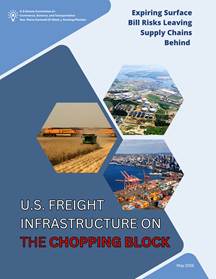
- American Freight Infrastructure: The United States freight transportation system moves 20.2 billion tons of goods valued at $18.7 trillion every year. Moving these goods isn’t cheap – the Council of Supply Chain Management Professionals estimates that U.S. businesses spent $2.3 trillion last year on logistics costs. Multimodal freight investments have significant returns on investment, including improving efficiency and reducing shipping costs. Driving these transportation costs down is critical to reducing prices for American consumers and helping American businesses compete against international companies. However, if advance appropriations are not renewed, funding will decrease 67 percent for four essential freight programs that could support more than 400 projects still in need of federal funding. U.S. Freight Infrastructure on the Chopping Block examines the benefits of the BIL’s freight investments and what is at risk for supply chains if a multiyear investment strategy is abandoned.
| Funding Levels | Unmet Need | ||||
| Program | FY 2026 | Estimated FY 2027 without advance appropriations | Percent Change | Projects | $ Requested |
| Nationally Significant Freight and Highways (INFRA) grant program | $1,740,000,000 | $1,100,000,000 | -37% | 122 | $19,700,000,000 |
| Port Infrastructure Development Program | $553,000,000 | $103,000,000 | -81% | 127 | $2,300,000,000 |
| Consolidated Rail Infrastructure and Safety Improvement Program | $1,137,000,000 | $137,000,000 | -88% | 149 | $4,900,000,000 |
| Railroad Crossing Elimination grant program | $600,000,000 | $0 | -100% | 58 | $1,000,000,000 |
| Freight Total | $4,030,000,000 | $1,340,000,000 | -67% | 456 | $27,900,000,000 |
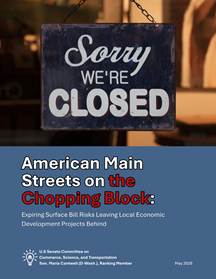
- Local Economic Development Infrastructure: Transportation improvements are a key element to supporting America’s main streets. From small towns to large urban centers, the nation’s downtown districts are essential economic hubs that provide employment opportunities, allow access to essential services and create community pride. America’s main streets form the building blocks of successful regional economies. The BIL provided significant support for main street improvement projects through grant programs that allow local governments to apply directly for federal funds. This is critical since only 16 percent of federal highway formula funds reach local roads. However, if advance appropriations are not renewed, funding for three popular grant programs that support local economic development will decrease 90 percent. American Main Streets on the Chopping Block examines the benefits of the BIL’s investment and what is at risk for essential business districts if a multiyear investment strategy is abandoned.
| Funding Levels | Unmet Need | ||||
| Program | FY 2026 | Estimated FY 2027 without advance appropriations | Percent Change | Projects | $ Requested |
| BUILD/RAISE Total | $1,645,000,000 | $145,000,000 | -91% | 101 | $1,200,000,000 |
| Safe Streets and Roads for All Grant Program | $1,000,000,000 | $0 | -100% | 593 | $3,300,000,000 |
| Reconnecting Communities Program | $235,000,000 | $130,000,000 | -45% | 321 | $2,400,000,000 |
| Total | $2,880,000,000 | $275,000,000 | -90% | 1,015 | $6,900,000,000 |
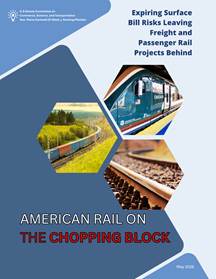
- American Rail Infrastructure: Freight rail carries 29 percent of U.S. ton-miles of freight commodities, including shipments moved via multimodal networks. Last year, Amtrak carried 34.5 million passengers—setting an all-time record. Amtrak serves 40 percent of America’s small and rural communities, and almost one in every five Amtrak riders travel to or from a station with no access to air service. The BIL provided $66 billion over five years in multiyear advance appropriations to grant programs that enhance passenger rail routes, strengthen supply chains and improve community safety near the tracks. However, if advance appropriations are not renewed, funding for four essential rail programs will decrease 83 percent. American Rail on the Chopping Block examines the benefits of the BIL’s rail investments and what is at risk for businesses, passengers and local communities if a multiyear investment strategy is abandoned.
| Funding Levels | Unmet Need | ||||
| Program | FY 2026 | Estimated FY 2027 without advance appropriations | Percent Change | Projects | $ Requested |
| Amtrak Northeast Corridor | $2,050,000,000 | $850,000,000 | -59% | Northeast Corridor: 20 projects; $34 billion Long Distance Expansion: 15 routes; $52 billion State Supported Routes: 69 corridors in the planning stage | |
| Amtrak National Network | $4,777,000,000 | $1,577,000,000 | -67% | ||
| Federal-State Partnership for Intercity Passenger Rail | $7,265,000,000 | $65,000,000 | -99% | ||
| Consolidated Rail Infrastructure and Safety Improvement Program | $1,137,000,000 | $137,000,000 | -88% | 149 | $4,900,000,000 |
| Railroad Crossing Elimination grant program | $600,000,000 | $0 | -100% | 58 | $1,000,000,000 |
| Total | $15,829,000,000 | $2,629,000,000 | -83% | ||
Senate Democrats, understanding the magnitude of harm that would occur if multiyear funding for these transportation infrastructure programs is cut or eliminated, sent a letter led by Sen. Cantwell calling on Senate and Appropriations Committee leadership to continue to fund Department of Transportation programs at Bipartisan Infrastructure Law levels.
“The Bipartisan Infrastructure Law (BIL) made critical, historic infrastructure investments through advance appropriations funding to reduce the cost of shipping goods, support economic development, and improve safety,” wrote the Senators. “Reducing funding available for transportation programs by treating BIL as a one-time infusion will increase costs, cost us American jobs, and set our country back.”
Links to Sen. Cantwell’s Chopping Block reports are below:
- American Infrastructure on The Chopping Block: Trump Budget Defunds Transportation Ahead of Surface Reauthorization is HERE.
- U.S. Freight Infrastructure on the Chopping Block: Expiring Surface Bill Risks Leaving Supply Chains Behind is HERE.
- American Main Streets on the Chopping Block: Expiring Surface Bill Risks Leaving Local Economic Development Projects Behind is HERE.
- American Rail on the Chopping Block: Expiring Surface Bill Risks Leaving Freight and Passenger Rail Projects Behind is HERE.
###